Why Do Large Aluminum Oil Pans Keep Cracking During Die Casting?
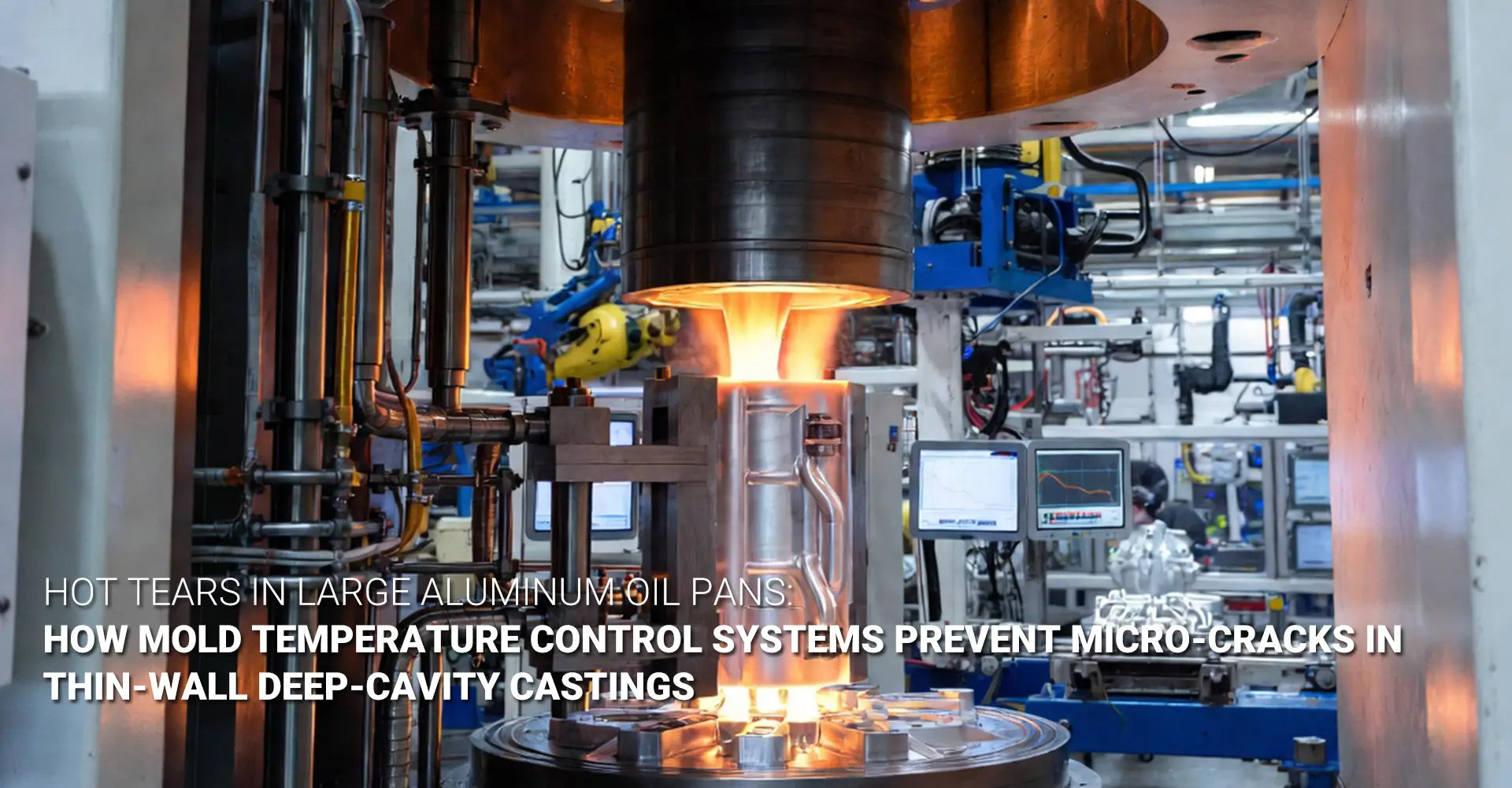
Why Do Large Aluminum Oil Pans Keep Cracking During Die Casting?
Automotive aluminum die casting promises strong, lightweight parts. But large oil pans often crack long before they ever reach the road. If you have ever pulled a part out of die casting tooling only to spot a hidden crack, you already know how costly this problem can be. These cracks, called hot tears, form inside the metal while it is still cooling. They are easy to miss and hard to fix later. For builders of automotive performance parts, that hidden flaw can turn into a real failure on the track. So why does this keep happening, and what actually stops it?

Here is the short answer. Hot tears form because aluminum shrinks as it cools, and uneven cooling creates stress inside the still-soft metal. Once that stress gets too high, the metal simply tears itself apart. Real hot tearing control comes from three things working together: a properly heated mold, the right alloy, and careful process design.
Quick facts before we dive in:
- Aluminum shrinks roughly 6.5% as it solidifies
- Mold temperatures up to 350°C are needed to keep cooling even
- Proper thermal control can lift casting yield from 70% to 95%
- Mold life can stretch 30% longer with the right setup
Now, let's slow down and look closer. Successful oil pan die casting depends on understanding exactly where cracks start, why large parts carry extra risk, and how the right equipment fixes the problem for good. Below, we break it all down step by step.
Table of Contents
- What Causes Hot Tears in Large Aluminum Oil Pan Castings?
- Why Are Large Oil Pans Especially Vulnerable to Cracking?
- How Do Oil Heater Systems Stop Hot Tearing in the Mold?
- What Other Benefits Come From Strong Thermal Control During Die Casting?
What Causes Hot Tears in Large Aluminum Oil Pan Castings?
Hot tears are not ordinary cracks. They form while the metal is still partly liquid, in what engineers call the "semi-solid" stage. Because of this, they behave very differently from cracks that form after a part has fully cooled.
In short: hot tears happen when internal stress pulls apart the metal's grain boundaries before it has fully hardened. This is different from cold cracking, which happens only after the part is solid. Timing is everything here.
Three factors combine to create this problem. First, aluminum naturally shrinks by about 6.5% as it solidifies, and this solidification shrinkage pulls the metal in every direction at once. Second, some areas of the part cool faster than others, so stress builds wherever hot and cold sections meet. Third, the rigid die walls hold the part in place, so the metal cannot shrink freely and tears instead. As a result, these tears tend to hide in thick junctions, rib roots, and boss bases—exactly the spots engineers often overlook during inspection.
Why Are Large Oil Pans Especially Vulnerable to Cracking?
Not every part faces this risk equally. Large, thin oil pans face it more than almost any other automotive casting on the production line.
Simply put, a large thin-wall casting cools unevenly across its surface, while deep cavities and sudden thickness changes pile on extra stress. Put those two issues together, and you get the perfect setup for thermal stress cracking.
Picture a flat oil pan stretching across a wide area with thin outer walls. As soon as molten metal hits the mold, those thin sections start cooling almost immediately. Meanwhile, thicker zones near mounting bosses stay hot much longer. This mismatch creates a tug-of-war inside the metal as it solidifies. Add in deep cavities and rapid changes in wall thickness, and now multiple stress points are fighting each other at the same time. That combination is exactly why oil pans crack more often than smaller, simpler parts.
How Do Oil Heater Systems Stop Hot Tearing in the Mold?
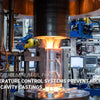
Thankfully, this problem has a proven fix. A well-designed mold temperature control system can remove the uneven cooling that causes hot tears in the first place.
Basically, these systems pump heated oil through channels built into the mold, keeping every section at a consistent temperature. Because the whole part cools at roughly the same rate, the stress that causes tearing simply never gets a chance to build up.
Why oil instead of water? Water boils at 100°C, but aluminum needs the mold surface near 300–350°C to solidify evenly, and oil heater die casting setups can safely reach those higher temperatures without boiling or forming localized hot spots. Before the very first shot of metal, the mold must also be pre-heated to its target temperature; skipping this step almost guarantees early cracking. For large, complex parts like oil pans, foundries go a step further by using multi-loop systems, so each zone of the mold gets its own independent temperature control. As a result, even the largest and most complicated molds stay at a steady, even temperature throughout the cycle.
What Other Benefits Come From Strong Thermal Control During Die Casting?
Preventing cracks is just the start. Thermal management die casting also pays off in several other ways that matter to any production team.
To sum it up:
- 15–20% higher qualification rate per batch
- 30%+ longer mold life before tooling needs replacement
- Fewer cold shuts, which means a cleaner surface finish right out of the mold
Better fill quality also means less cleanup work before parts move on to CNC machining or coating steps. On top of equipment choices, alloy selection plays a supporting role too. Choosing a crack-resistant aluminum alloy with a narrow solidification range, paired with controlled iron content between 0.6% and 1.1%, lowers the chance of brittle phases forming at the grain boundaries. Some foundries even use custom blends developed specifically for aluminum parts with complex geometry. Add in simulation software that predicts hot spots before any steel gets cut, and one real oil pan project pushed its yield from 70% all the way to 95%.
Conclusion: What to Look for When Sourcing a Crack-Resistant Oil Pan Supplier
Choosing the right partner for aftermarket oil pan manufacturing comes down to one thing: thermal control, not just price. Before signing on with a supplier, ask a few direct questions:
- What type of temperature control system do you use, and what's the maximum operating temperature?
- Do you pre-heat molds before the first shot of every run?
- Do you run simulations to catch hot spots before cutting steel?
A foundry that can answer these clearly understands something important: the real difference between a part that fails at 10,000 miles and one that lasts 100,000 miles is often invisible to the eye, but it's built into every stage of the process. Ask the right questions upfront, and you save yourself from costly failures down the road.
Recommended External Resources
[Automotive aluminum die casting][^1]
[mold temperature control system][^5]
[^5]: An entry from the Foundry Lexicon (Giessereilexikon) detailing die heating and cooling practices using temperature controllers with oil or pressurized water[reference:2]. It warns against preheating with burners, which risks local superheating that can reduce steel strength[reference:3], and notes that preheating molds before clamping requires careful heat distribution[reference:4].