How Does Zn-Al-Mg Coated Steel Cut Your Material Costs Without Sacrificing Corrosion Protection?
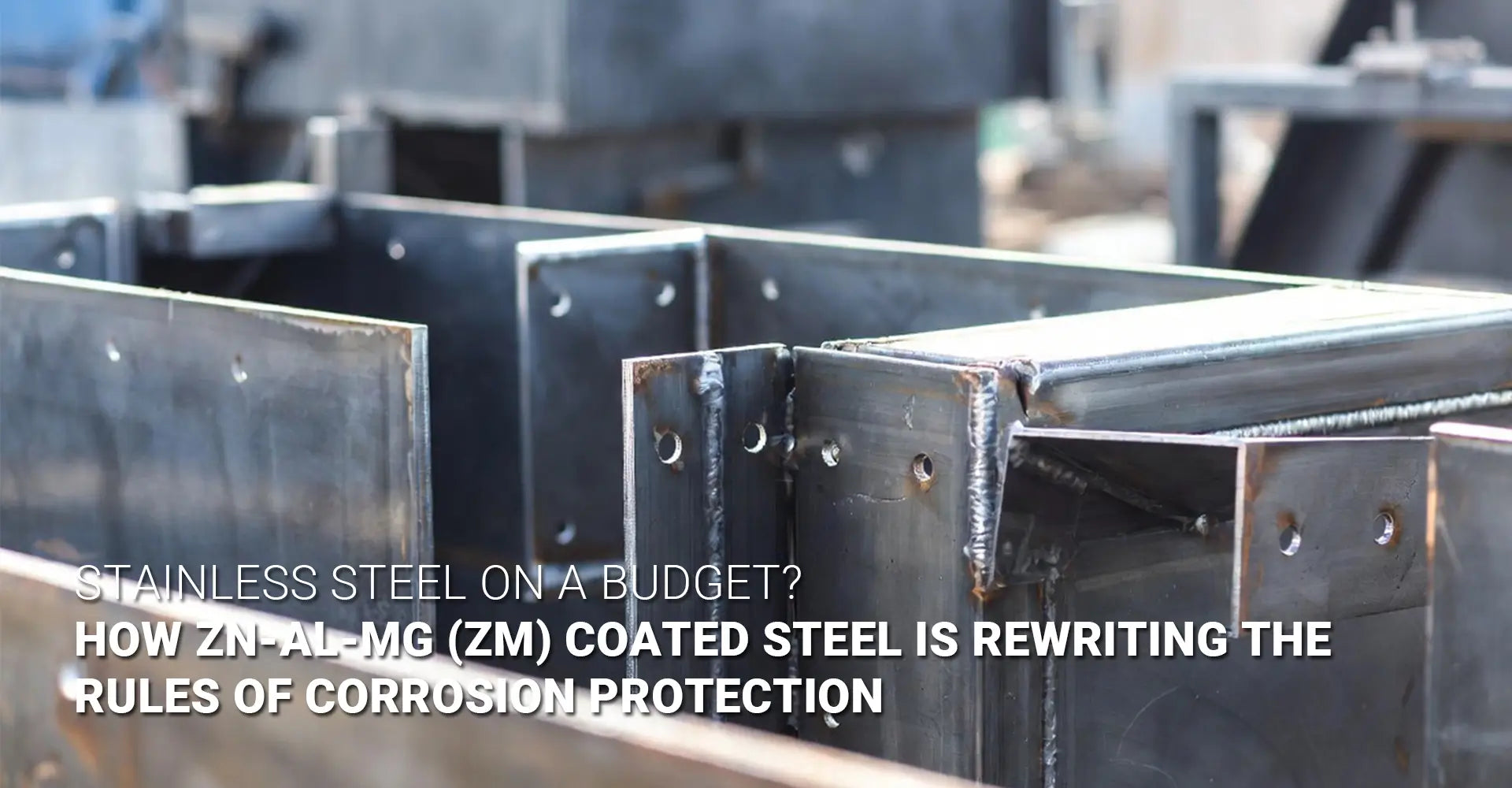
How Does Zn-Al-Mg Coated Steel Cut Your Material Costs Without Sacrificing Corrosion Protection?
Finding the right balance between durability and budget is a constant challenge for procurement teams. Therefore, many industrial buyers struggle with a difficult choice: pay premium prices for stainless steel or accept the limited protection of standard galvanized materials. However, a third option is gaining significant traction in manufacturing circles.

Quick Answer: What You Need to Know About ZM Coated Steel
Cost savings: 50-70% less than 304 stainless steel
Corrosion protection: 10-20x better than standard galvanized
Key advantage: Self-healing cut-edge protection
Best for: Industrial enclosures, cable trays, solar mounting, agricultural equipment
When to skip: Extreme chemical exposure or food-grade applications
The bottom line? Zn-Al-Mg coated steel delivers stainless-like performance at a fraction of the cost. Moreover, it protects itself even after cutting, punching, or drilling—something traditional coatings simply cannot do.
Traditional material choices have left procurement managers in a difficult position for years. On one hand, carbon steel and standard galvanized options offer low upfront costs but fail quickly in corrosive environments. On the other hand, stainless steel provides excellent protection but strains project budgets significantly. Consequently, this gap has created growing demand for materials that bridge the performance-to-price divide. That's exactly where corrosion resistant sheet metal technologies like ZM coating come into play.
Table of Contents
- Why Are Procurement Teams Reconsidering Traditional Stainless Steel Specifications?
- What Makes Zn-Al-Mg Coated Steel Different from Regular Galvanized Material?
- How Does the "Self-Healing" Mechanism Actually Work on Cut Edges?
- Where Does ZM Steel Deliver the Best Return on Investment?
- What Are the Practical Limits of ZM Steel Compared to Stainless?
- How Should Procurement Managers Evaluate ZM Steel Suppliers and Specifications?
Why Are Procurement Teams Reconsidering Traditional Stainless Steel Specifications?
Rising material costs have forced procurement teams to examine every line item in their bills of materials. Additionally, global supply chain disruptions have made stainless steel pricing increasingly unpredictable. As a result, many industrial buyers now actively search for alternatives that maintain quality standards while reducing expenses.
The Price Gap Creating Market Demand
Key Cost Drivers in Today's Market:
- 304 stainless steel: $9,500-$12,000 per ton for grating and panels
- Standard galvanized: $2,800-$3,200 per ton
- The opportunity: A 3-4x price gap creates strong incentive for intermediate solutions
Clearly, this substantial price difference explains why procurement teams feel pressure to find alternatives. In fact, many companies find that stainless steel specifications were chosen years ago when budgets were less constrained.
The reality is even more challenging when you consider total project costs. For instance, a single industrial equipment enclosure fabricated from 304 stainless steel might consume 30-40% of a component's entire budget. Furthermore, when multiplied across hundreds or thousands of units, these costs become difficult to justify—especially when the actual operating environment doesn't require stainless steel's full protective capabilities.
Budget constraints aren't the only factor driving this reconsideration. Additionally, procurement managers face increasing pressure to demonstrate value engineering and cost reduction initiatives. Meanwhile, engineering teams need assurance that any material substitution won't compromise product reliability or shorten service life. Therefore, the ideal alternative must deliver measurable performance improvements over standard galvanized steel while maintaining a significant cost advantage versus stainless options. This is precisely where ZM steel vs stainless steel comparisons become highly relevant for decision-makers.
What Makes Zn-Al-Mg Coated Steel Different from Regular Galvanized Material?
The fundamental difference lies in coating chemistry rather than just coating thickness. Traditional galvanized steel relies solely on zinc to provide corrosion protection. In contrast, Zn-Al-Mg coated steel combines three metals that work synergistically to create superior barriers against rust and oxidation.
Understanding the Three-Metal Advantage
Coating Composition Breakdown:
- Standard GI coating: 100% zinc
- ZM coating: Zinc + 6-19% Aluminum + 3-6% Magnesium
- Result: Multi-layered protection with both barrier and active defense mechanisms
This compositional difference isn't just a minor variation. Rather, it represents a fundamental shift in how coated steel protects the underlying substrate.

The evolution of metallic coatings on steel has progressed through several generations. First, pure zinc galvanizing emerged in the 1970s as a major improvement over bare steel. Then, in the 1980s, zinc-aluminum alloys (Galfan) added aluminum to improve coating ductility and extend service life moderately. However, neither technology adequately addressed the critical weakness of all coated steels: cut-edge corrosion protection.
Zn-Al-Mg coating composition changes this equation entirely. When these three metals are combined in precise ratios, they create a coating with multiple protective mechanisms working simultaneously. Specifically, the zinc provides sacrificial protection through electrochemical action. Meanwhile, aluminum forms a stable oxide layer that acts as a physical barrier. Most importantly, magnesium enables the coating's unique self-healing properties—a capability that neither zinc nor aluminum can deliver alone.
The microstructure of ZM coatings reveals the source of their superior performance. Under microscopic examination, the coating shows distinct phases: a zinc-rich matrix, aluminum-rich dendrites, and magnesium-zinc intermetallic compounds. Together, these phases create a protective system that outperforms single-element coatings by substantial margins. For manufacturers engaged in sheet metal fabrication, this means parts that maintain their protective coating integrity even after punching, cutting, and forming operations.
How Does the "Self-Healing" Mechanism Actually Work on Cut Edges?
Cut-edge corrosion represents the primary failure mode for nearly all coated steel products. Specifically, when standard galvanized steel is cut, the exposed bare steel immediately begins to rust because the protective coating only covers the original surface. However, ZM-coated materials behave completely differently at these vulnerable points.
The Chemistry Behind Self-Protection
The Self-Healing Process in Five Steps:
- Cutting exposes bare steel at edges, holes, or scratches
- Magnesium reacts with atmospheric moisture and carbon dioxide
- Protective zinc-magnesium carbonates form as stable compounds
- Dense crystalline layer seals the previously exposed edge
- Red rust formation is prevented before it can start spreading
Importantly, this process happens automatically without any additional treatment or maintenance. As a result, fabricated parts maintain their corrosion resistance even at the points where traditional coatings fail most quickly.
The self-healing coating mechanism works through a specific electrochemical reaction. When magnesium in the coating comes into contact with moisture and carbon dioxide from the air, it forms basic zinc-magnesium carbonates—specifically compounds like Zn₅(CO₃)₂(OH)₆ and Mg₅(CO₃)₄(OH)₂. Unlike simple rust, these carbonates are dense, stable, and highly adherent to the steel substrate. Furthermore, they effectively seal the exposed edge against further moisture penetration.
This stands in sharp contrast to standard galvanized coatings. While pure zinc does provide some sacrificial anode protection by corroding preferentially to protect the steel, it cannot form the stable carbonate barriers that ZM coatings create. Consequently, cut edges on galvanized steel will eventually develop red rust that creeps inward from the exposed edge—a phenomenon called "edge creep" that gradually undermines the entire coating.
Salt spray testing provides quantifiable evidence of this advantage. In accelerated corrosion tests following ASTM B117 protocols, ZM-coated steel consistently shows 5-10 times longer time-to-red-rust compared to standard galvanized material. Even more impressive, the cut edges of ZM steel often outperform the flat surfaces of conventional galvanized coatings. For procurement teams evaluating corrosion resistant steel for manufacturing applications, this data translates directly to extended product lifespans and reduced maintenance costs.
Where Does ZM Steel Deliver the Best Return on Investment?
Not every application benefits equally from ZM coating technology. However, specific industrial sectors have emerged as particularly well-suited to this material's unique combination of cost and performance characteristics. Consequently, understanding where ZM steel delivers maximum value helps procurement teams make informed substitution decisions.
Top Applications Driving ZM Adoption
Industries and Products Leading ZM Specification:
- Electrical enclosures: Control cabinets, switchgear housings, junction boxes
- Cable management systems: Trays, conduits, ladder racks, and supports
- Solar infrastructure: Photovoltaic mounting frames and racking systems
- Agricultural equipment: Grain storage bins, equipment housings, ventilation systems
- Industrial roofing: Panels and structural components in moderately corrosive environments
These applications share common characteristics that make ZM coating particularly valuable. Specifically, they require good corrosion resistance, involve significant fabrication (cutting and punching), operate in outdoor or humid environments, and represent cost-sensitive markets where stainless steel pricing becomes prohibitive.

Electrical and control equipment represents perhaps the fastest-growing segment for ZM adoption. Traditional industrial enclosure materials have included painted carbon steel, standard galvanized, or stainless steel depending on environment and budget. However, ZM coating offers an attractive middle ground. It protects against condensation and humidity inside enclosures while resisting atmospheric corrosion on exterior surfaces. Moreover, because enclosure fabrication involves extensive cutting, punching, and hole-drilling for mounting hardware, the cut-edge corrosion protection becomes especially valuable. Companies in the industrial machinery sector have found ZM specifications reduce long-term maintenance while keeping initial costs competitive.
Cable management infrastructure presents similar advantages. Cable trays installed in manufacturing facilities, warehouses, or semi-outdoor environments face regular moisture exposure but rarely encounter the aggressive chemicals that would necessitate full stainless steel. Furthermore, cable tray systems require thousands of cuts and connections during installation—creating countless potential corrosion initiation points. ZM coating's self-healing properties directly address this vulnerability while delivering significant cost savings versus stainless alternatives.
The solar energy sector has rapidly embraced ZM technology for mounting structures. These applications demand 25-30 year service lives in outdoor environments, yet project economics cannot support full stainless steel specifications. Additionally, solar mounting systems face a unique challenge: they're installed in diverse climates worldwide, from desert heat to coastal humidity. ZM coatings provide reliable protection across this range while maintaining the formability needed for complex mounting brackets and adjustment mechanisms.
Agricultural applications benefit from ZM's combination of corrosion resistance and cost-effectiveness. Grain storage facilities, livestock housing, and farm equipment operate in consistently humid environments with exposure to moisture, fertilizers, and organic acids. These conditions quickly degrade painted carbon steel but don't necessarily require the premium cost of stainless. For manufacturers serving automotive and agricultural markets, ZAM sheet metal specifications increasingly appear in component drawings for brackets, shields, and enclosures.
What Are the Practical Limits of ZM Steel Compared to Stainless?
While ZM coated steel offers impressive capabilities, it's not a universal replacement for stainless steel in every application. Therefore, understanding where this material reaches its performance limits helps prevent inappropriate specifications that could lead to premature failures. Procurement teams need balanced information to make sound decisions.
Knowing When Stainless Steel Remains the Better Choice
Applications Where Stainless Steel Still Wins:
- Direct chemical contact: Exposure to concentrated acids, alkalis, or aggressive solvents
- Food and pharmaceutical: Environments requiring sanitary surfaces and FDA compliance
- Marine splash zones: Constant saltwater contact rather than atmospheric exposure
- High-temperature service: Continuous operation above 250°C (482°F)
- Aesthetic requirements: Mirror-polished or decorative finishes for visible components
Each of these conditions exceeds ZM coating's protective capabilities in specific ways. Consequently, attempting to substitute ZM for stainless in these scenarios would compromise product integrity or regulatory compliance.
Chemical compatibility represents the most critical limitation. While ZM coatings resist atmospheric corrosion exceptionally well, they cannot withstand direct exposure to strong acids (pH < 4) or strong alkalis (pH > 10). For instance, equipment in chemical processing plants that handles concentrated solutions needs the inherent corrosion resistance of stainless steel in CNC machining and fabrication. The coating would be compromised quickly, exposing the carbon steel substrate to rapid deterioration.
Food processing and pharmaceutical applications present a different type of requirement. These industries need materials that meet strict sanitary standards, clean easily without harboring bacteria, and comply with FDA or USDA regulations. Stainless steel grades like 304 and 316 are specifically approved for food contact surfaces. In contrast, ZM-coated carbon steel does not meet these regulatory requirements. Additionally, the rough surface texture of metallic coatings creates potential harboring points for contaminants—unacceptable in sanitary environments.
Temperature performance also differentiates these materials significantly. ZM coatings begin to degrade when exposed to sustained temperatures above 250°C because the zinc and magnesium components oxidize and lose their protective properties. Meanwhile, stainless steel maintains its corrosion resistance and mechanical strength well beyond 500°C. Therefore, applications like exhaust systems, furnace components, or high-temperature process equipment require stainless specifications.
Marine environments present nuanced decisions. ZM coating performs excellently in coastal atmospheric conditions—resisting salt-laden air that would quickly corrode standard galvanized steel. However, components that experience actual seawater immersion or regular splash-zone contact need the superior chloride resistance of 316-grade stainless steel. The lifecycle cost analysis must factor in the specific exposure level rather than simply the proximity to coastal locations.
Finally, aesthetic considerations sometimes dictate material choice. When visible components require mirror-polished finishes, brushed textures, or specific decorative appearances, stainless steel remains the only practical option. ZM coatings have a characteristic matte gray appearance that cannot be polished to the same degree. While some applications consider this industrial aesthetic desirable, others require the clean, bright appearance that only stainless steel can provide.
Understanding these limitations doesn't diminish ZM coating's value. Rather, it ensures appropriate material selection based on actual operating conditions. For the majority of industrial applications that don't involve these extreme conditions, ZM steel represents an affordable stainless steel alternative that delivers performance where it matters most.
How Should Procurement Managers Evaluate ZM Steel Suppliers and Specifications?
Selecting the right ZM steel supplier requires more than just comparing unit prices. Instead, successful procurement demands verification of coating quality, understanding of specification options, and confirmation of supplier capabilities. Therefore, asking the right technical questions upfront prevents costly problems later.
The Essential Supplier Qualification Checklist
5 Critical Questions Every Procurement Manager Should Ask:
- What is your exact coating composition? Request specific Zn-Al-Mg percentages and verify they meet application requirements
- Which coating weight grades are available? Confirm stock availability of ZM80, ZM120, ZM310, or other relevant grades
- Can you provide third-party test certifications? Salt spray test results should come from independent laboratories, not just internal claims
- How do you control coating uniformity? Ask about quality control processes, inspection frequency, and rejection criteria
- Do you have cut-edge corrosion test data? This separates genuine ZM suppliers from those simply relabeling standard galvanized material
These questions cut through marketing language to reveal actual supplier capabilities and product quality. Furthermore, the responses help identify which suppliers have deep technical knowledge versus those treating ZM as just another commodity product.

Coating weight selection represents a critical specification decision that directly impacts both cost and performance. ZM310 coating offers the highest corrosion protection with 310 grams of coating per square meter (both sides combined). This heavy coating suits severe environments like coastal industrial zones or agricultural applications with consistent moisture exposure. However, it also costs more than lighter coating weights.
ZM120 coating (120 g/m²) represents the industry standard for most general industrial applications. It provides substantial corrosion resistance improvement over galvanized steel while maintaining reasonable material costs. Most electrical enclosures, cable trays, and equipment housings specify ZM120 as the baseline protection level.
ZM80 coating (80 g/m²) offers entry-level protection suitable for indoor applications or mild environments. While it still delivers the self-healing cut-edge protection that defines ZM technology, the thinner coating reduces total service life compared to heavier grades. Consequently, ZM80 works well for cost-sensitive applications in controlled environments but may disappoint in outdoor or humid conditions.
Quality verification requires examining actual test data rather than accepting supplier claims at face value. Request documentation showing:
- Salt spray test results following ASTM B117 or equivalent ISO standards, with time-to-red-rust measurements on both flat surfaces and cut edges
- Coating thickness measurements taken at multiple locations across sample sheets, demonstrating uniformity
- Adhesion test results proving the coating won't flake or peel during forming operations
- Chemical composition analysis confirming the zinc, aluminum, and magnesium percentages match specification
Suppliers who hesitate to provide this documentation or only offer vague performance claims should raise immediate concerns. Legitimate ZM producers maintain comprehensive test records and willingly share results with qualified buyers.
Additionally, understanding surface finish options helps match material to application requirements. Some ZM coatings come with additional treatments for improved formability, paintability, or specific appearance characteristics. For projects requiring painted finishes, ask about chromate or phosphate conversion coatings that enhance paint adhesion. When considering different surface finish options, verify compatibility with your planned fabrication and finishing processes.
Finally, evaluate supplier stability and market position. The global ZM coated steel market reached $4.08 billion in 2024 and continues growing rapidly. However, not all suppliers have equal technical capabilities or production consistency. Established steel mills with dedicated ZM coating lines generally deliver more reliable quality than distributors purchasing from multiple sources. Therefore, verify that your supplier has direct coating capability rather than simply reselling material from others.
Conclusion
The case for Zn-Al-Mg coated steel becomes clear when examining the numbers objectively. This material delivers corrosion protection 10-20 times better than standard galvanized steel while costing approximately one-third the price of 304 stainless steel. Moreover, its self-healing properties solve the cut-edge corrosion problem that plagues traditional coated materials. Consequently, procurement teams gain a valuable tool for reducing material costs without sacrificing product reliability.
However, success requires matching material capabilities to actual application requirements. ZM coating excels in industrial environments with moderate corrosive exposure—precisely where most electrical enclosures, cable management systems, solar mounting structures, and agricultural equipment operate. In contrast, applications involving direct chemical contact, food-grade requirements, or extreme temperatures still need stainless steel specifications.
The global market clearly recognizes ZM technology's value proposition. With the market growing from $4.08 billion in 2024 toward a projected $6.89 billion by 2033, early adopters position themselves advantageously. They reduce material costs today while benefiting from expanding supplier networks and improving product availability in the future.
Taking Action: Your Next Steps
Practical implementation pathway:
- Review current specifications – Identify components currently using 304 stainless steel in moderate corrosive environments
- Calculate potential savings – Model the cost difference between stainless and ZM across your annual volume
- Request qualified samples – Obtain material samples and complete test certifications from reputable suppliers
- Run validation trials – Test small production batches before committing to full specification changes
Final consideration: Material decisions made today affect product costs and reliability for years to come. ZM coated steel won't replace stainless steel in every application, nor should it. However, for the large segment of industrial products that need reliable corrosion protection without premium pricing, this technology delivers measurable advantages. As the market continues expanding and more suppliers add ZM capabilities, procurement teams who understand this material's strengths and limitations will make better specification decisions and achieve better cost outcomes.
Recommended Resources for Further Research
[corrosion resistant sheet metal][^1]
[ZM steel vs stainless steel][^3]
[self-healing coating mechanism][^4]
[cut-edge corrosion protection][^5]
[^1]: A comprehensive material selection guide from DSW Moulding covering sheet metal materials including SPCC, SECC, stainless steel, and aluminum. It includes thickness recommendations, surface treatments (zinc plating, passivation, anodizing, powder coating), and application considerations for parts requiring high corrosion resistance or premium surface appearance.[reference:0][reference:1]
[^2]: An official product page from Wheeling-Nippon Steel, the first and only producer of ZAM® coated steel in the Americas. ZAM® is a hot-dip Zinc-Aluminum-Magnesium alloy-coated steel sheet offering unparalleled corrosion resistance, including cut-edge rust protection and self-healing properties. The product meets ASTM A1046/A1046M Type 1 specifications and serves as a cost-saving alternative to stainless steel and aluminum in severe environments such as coastal and agricultural applications.[reference:2][reference:3][reference:4]
[^3]: The official product page for ZAM® coated steel from Wheeling-Nippon Steel, the first and only producer in the Americas. It provides a direct performance comparison, noting that ZAM® bridges the gap between heavily coated galvanized steel and costly stainless steel, offering superior cut-edge corrosion protection, self-healing properties, and cost savings of up to 40% compared to stainless steel for applications in severe coastal and agricultural environments.
[^4]: A peer-reviewed academic study (MDPI Coatings, April 2024) that systematically unravels the self-healing mechanism in Zn-Al-Mg alloy coated steel. Through cyclic corrosion tests, the research confirms that corrosion products such as layered double hydroxides (LDHs) and Mg(OH)₂ form at cut edges, providing active protection and significantly reducing corrosion, offering a paradigm shift for marine applications.
[^5]: A manufacturer's technical resource that details the protective mechanism of ZAM® coatings on cut edges. It explains that a protective film forms over exposed edges due to moisture and that the coating provides galvanic protection during the interim, effectively preventing corrosion at the most vulnerable points of sheet metal. This resource includes visual comparisons of edge protection over time.[reference:0][reference:1]
[^6]: The official product page for ZAM® coated steel, detailing its composition, corrosion resistance, and formability. It highlights the coating's ability to protect cut edges and describes the self-healing mechanism. This is a primary source for understanding the material's properties, performance data, and applications across industries such as agriculture, construction, and solar.[reference:2]